

Etiopien Lala Salama Decaf - 250g
Etiopien Lala Salama Decaf - 250g
This coffee comes from Taferi Kela in Sidamo, Ethiopia, and is produced in collaboration with Bette Buna. The coffee was subsequently decaffeinated by Coffein Compagnie using the ethyl acetate process – a method that gently and selectively removes caffeine from green coffee while preserving as much of the coffee’s original character as possible.
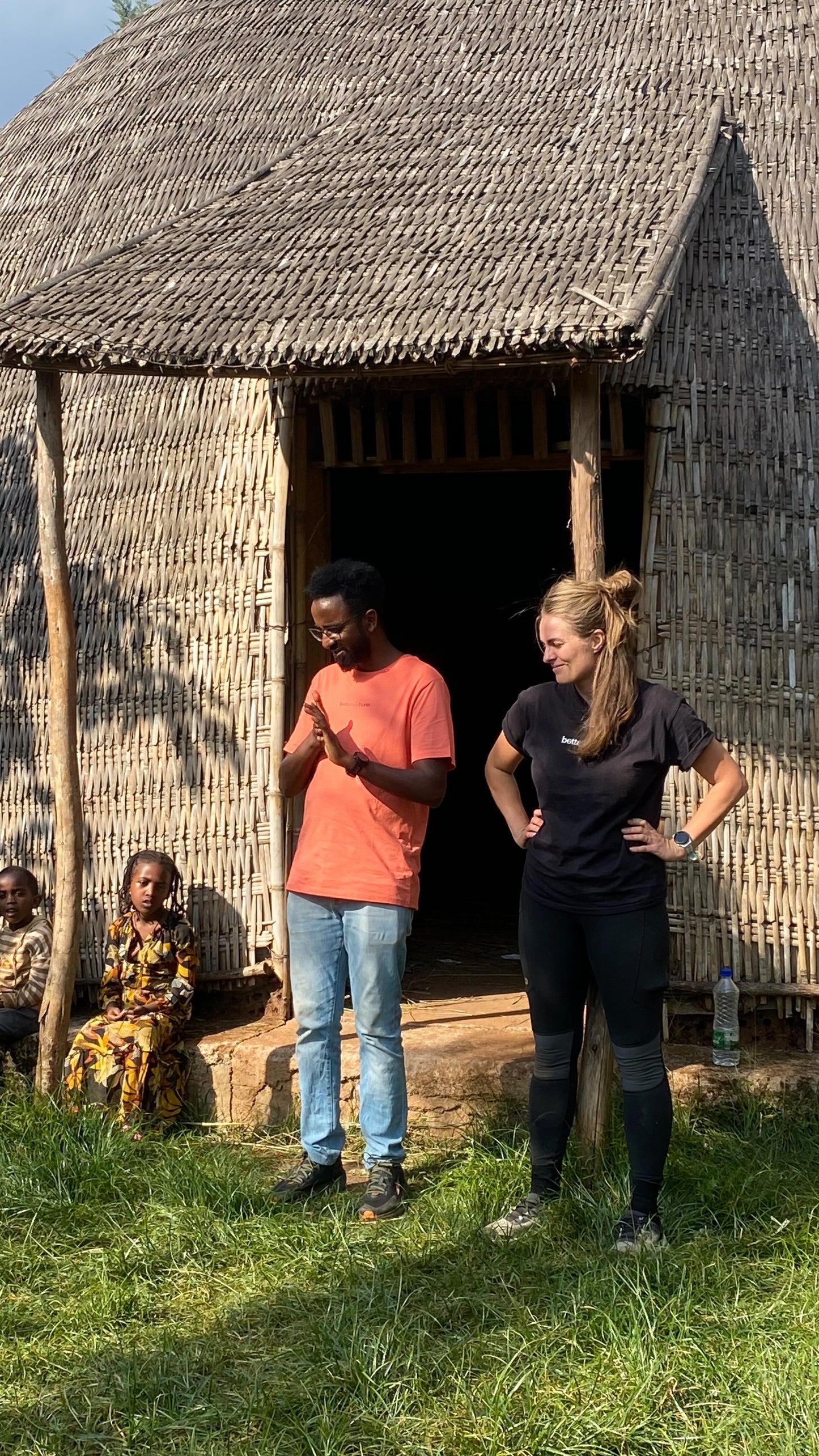
Bette Buna literally means “House of Coffee” and is deeply rooted in the village of Taferi Kela. The company’s story began when Syoum and Emame asked Dawit and Hester to take over their farm and, more importantly, the responsibility of developing and building the local community. Although the area shares a mountain range with better-known producers in Sidamo, Taferi Kela has long been overlooked, and Bette Buna is currently the only larger organisation working in the area.
Coffee is a central part of Ethiopia’s economy, yet the vast majority of people working in coffee still earn very low incomes. Bette Buna is actively working to change the conditions for coffee farmers in the area. Farmers are taught about soil improvement, agroforestry and the importance of harvesting ripe coffee cherries. Ripe cherries weigh more and produce better coffee, meaning farmers receive better payment per kilo as well as a quality premium.
An important part of this work is Bette Buna’s nursery, which distributes more than 350,000 healthy coffee seedlings every year. The seedlings are adapted to a changing climate and give farmers a long-term opportunity to increase their income. Once the trees mature, each seedling is estimated to generate an average of at least $2 per year for the farmer. Together, this represents a potential economic impact of more than $650,000 per year in a region where the average household income is less than $50 per month.
Bette Buna also works actively with inclusion. The nursery provides employment for people with disabilities, particularly deaf people, as well as families of people with disabilities and other groups who often struggle to find work, such as single mothers.
Traceability and quality
Bette Buna’s traceability is exceptionally detailed. Every coffee lot is documented throughout the entire production process – from the people who picked the cherries to those who processed and dried the coffee. This provides not only greater quality control, but also transparency around the people who create the value in the coffee and helps ensure that they are paid fairly. The extensive traceability also means that Bette Buna is well prepared for the EU’s requirements concerning deforestation-free supply chains under EUDR.
The processing work in Taferi Kela is led by Hester, Dawit and Sissay. Through careful and controlled processing, the team has developed a highly consistent and high-quality natural process.
For this lot, the coffee cherries were carefully sorted before being placed on raised African-style drying beds. This coffee is an extended natural, meaning that the cherries are dried slowly in the shade rather than directly in the sun. The longer drying time contributes to increased complexity and intensity in the cup and has become a recurring processing method at Bette Buna.
Once the cherries had reached the correct moisture level, they were bagged, labelled and left to rest for at least eight weeks. The dried cherries were then hulled locally and the coffee was hand-sorted once again to remove defects. The green coffee was subsequently transported to Bette Buna’s dry mill in Gelan, just outside Addis Ababa, where it was cleaned, sorted by size and density, and colour-sorted before export.
Decaffeinated with ethyl acetate
The coffee was then decaffeinated by Coffein Compagnie. The green coffee beans are first treated with steam to remove the silver skin and increase their moisture content. This opens up the cellular structure of the beans and makes it possible to selectively extract the caffeine.
A water-based ethyl acetate solution is then used to gradually extract the caffeine from the beans. Once the caffeine has been removed, steam is used to remove any remaining ethyl acetate, after which the beans are dried back to their original moisture content.
Ethyl acetate occurs naturally in sugar cane, coffee and fruits such as strawberries and bananas, and is also used as a flavouring agent in food products. The method makes it possible to decaffeinate the coffee in a gentle and targeted way, with the aim of preserving as much as possible of the original character of the Taferi Kela coffee.
If you would like to learn more about the process, we highly recommend James Hoffmann’s video about this particular method.
You can finally enjoy Solde coffee late in the evening, even if you are sensitive to caffeine, without having to compromise on your sleep quality.
Character: Berry compote, caramel, black tea.
Photos: Bette Buna
Couldn't load pickup availability


Facts
Country/Region:Ethiopia, Sidamo
Farm/Cooperative: Taferi Kela
Producer: Bette Buna
Processing method: Decaf . Suger Cane (EA Decaf)
Variety: Mixed heirloom
Altitude: 1900-2100 m.
Character: Caramell, milk chocholate, almonds.